
Heraldry
Heraldry is more than a collection of symbols; it is a living expression of identity, ancestry, and tradition.
Basics of Heraldry
Heraldry emerged in Western Europe during the high middle ages as a means of identifying one another on the battlefield. Over time, these symbols became hereditary emblems of people, families, institutions, and communities, developing into a rich visual language of identity and heritage.
Key Terms:
Coat of Arms: A heraldic design centered on a shield.
Tinctures: The colors and metals used in heraldry.
Charge: A figure or symbol displayed on the shield.
Crest: A figure placed above the helmet.
Blazon: The formal description of a coat of arms.
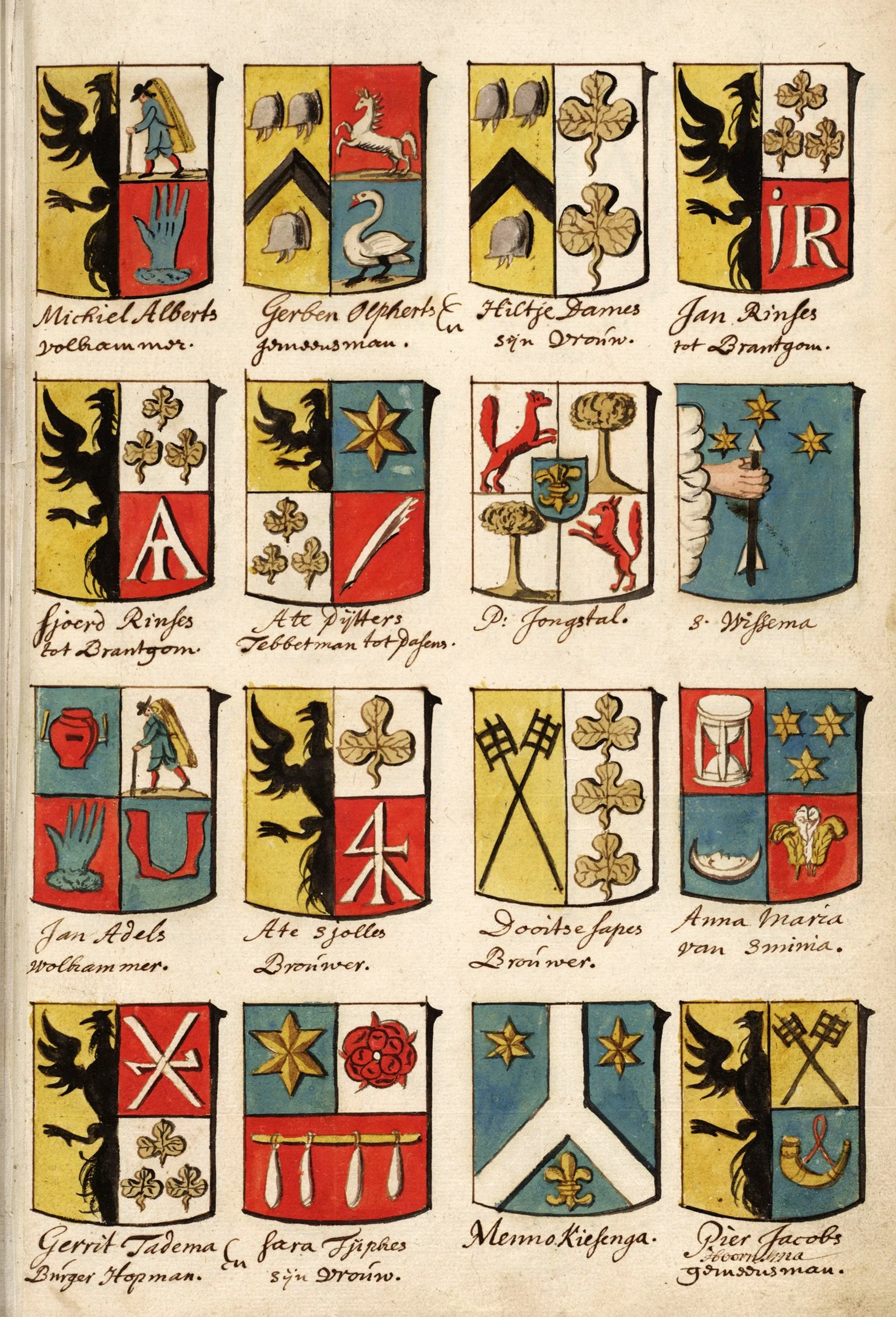
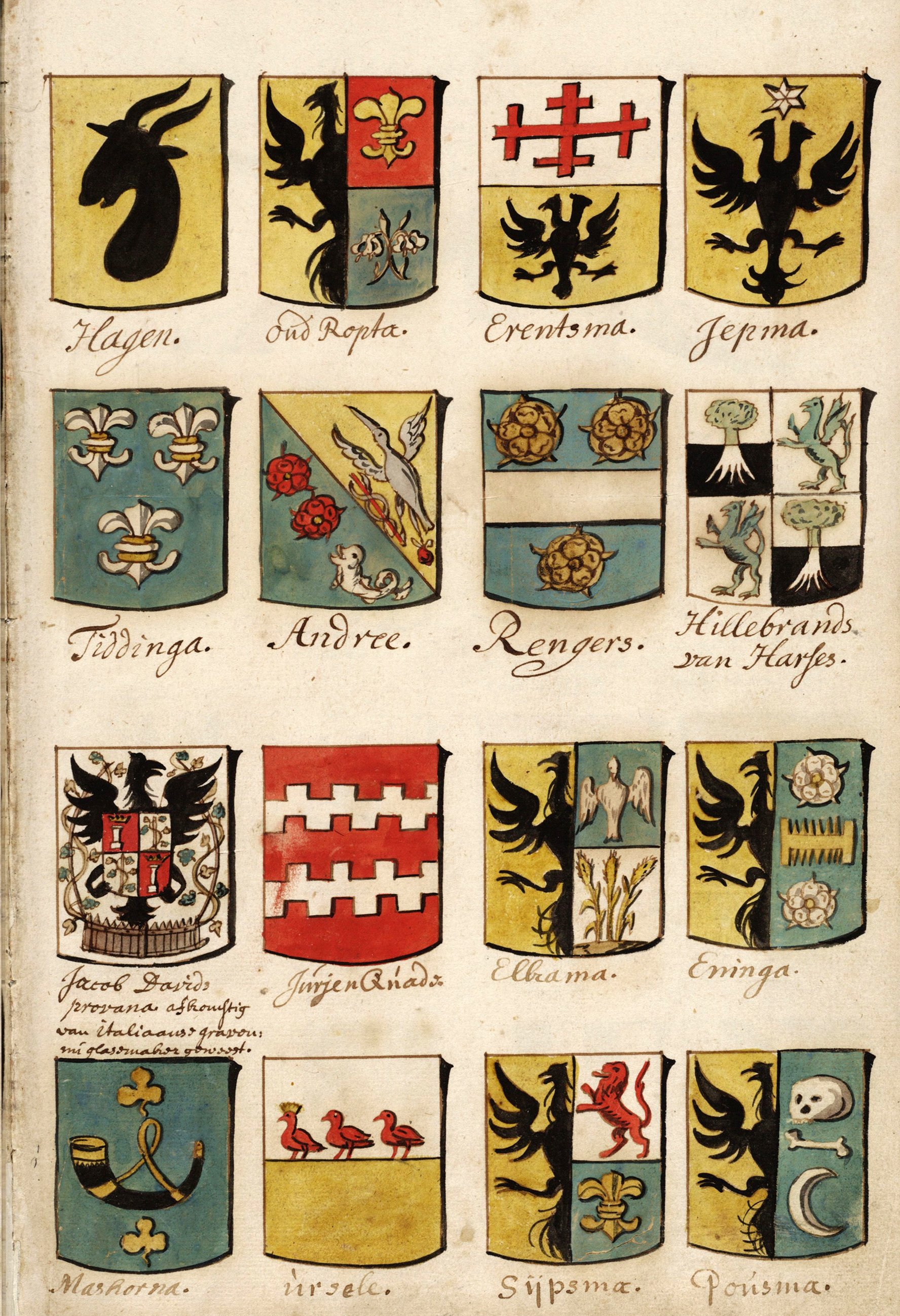
Gerrit Hesman, Wapen- en Vlaggenboek Hesman (1708), fol. 163 & 102, “Borgerlijke Wapenen.” Historisch Centrum Leeuwarden, collection reference F192. Digitized image accessed via the Historisch Centrum Leeuwarden Image Bank.
Heraldic Research & Family Arms
Through Lowland Lineage and Arms, I offer genealogical and heraldic research services to individuals and families interested in discovering their heraldic heritage, investigating ancestral coats of arms, or establishing a new heraldic tradition for their family.
My research encompasses the identification and documentation of historical coats of arms, the investigation of heraldic records and armorials, and the genealogical research necessary to establish connections between individuals and historically armigerous families. Where an established heraldic tradition exists, I can assist in tracing its origins and identifying the genealogical evidence necessary to substantiate a claim of descent.
For those without an identifiable ancestral coat of arms, Lowland Lineage and Arms can provide guidance in developing a new heraldic achievement, from the initial design and application of heraldic conventions to identifying the appropriate heraldic authority and navigating the procedures for registration or grant, where available.
Whether you are seeking to rediscover an existing family coat of arms or establish a new heraldic tradition, Lowland Lineage and Arms provides a research-led approach to exploring, documenting, and preserving your family's heraldic heritage.
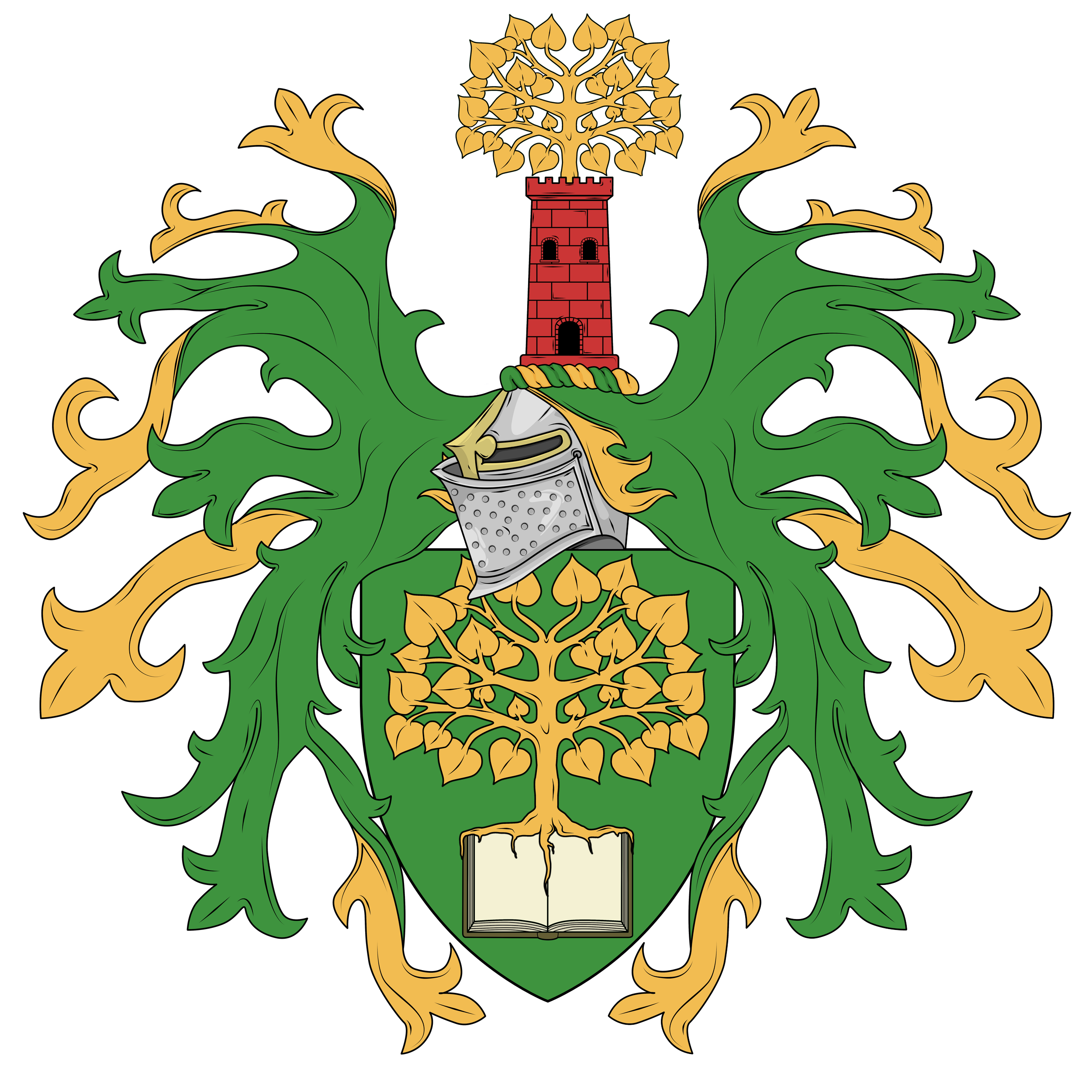
Full Achievement of Arms for Lowland Lineage and Arms
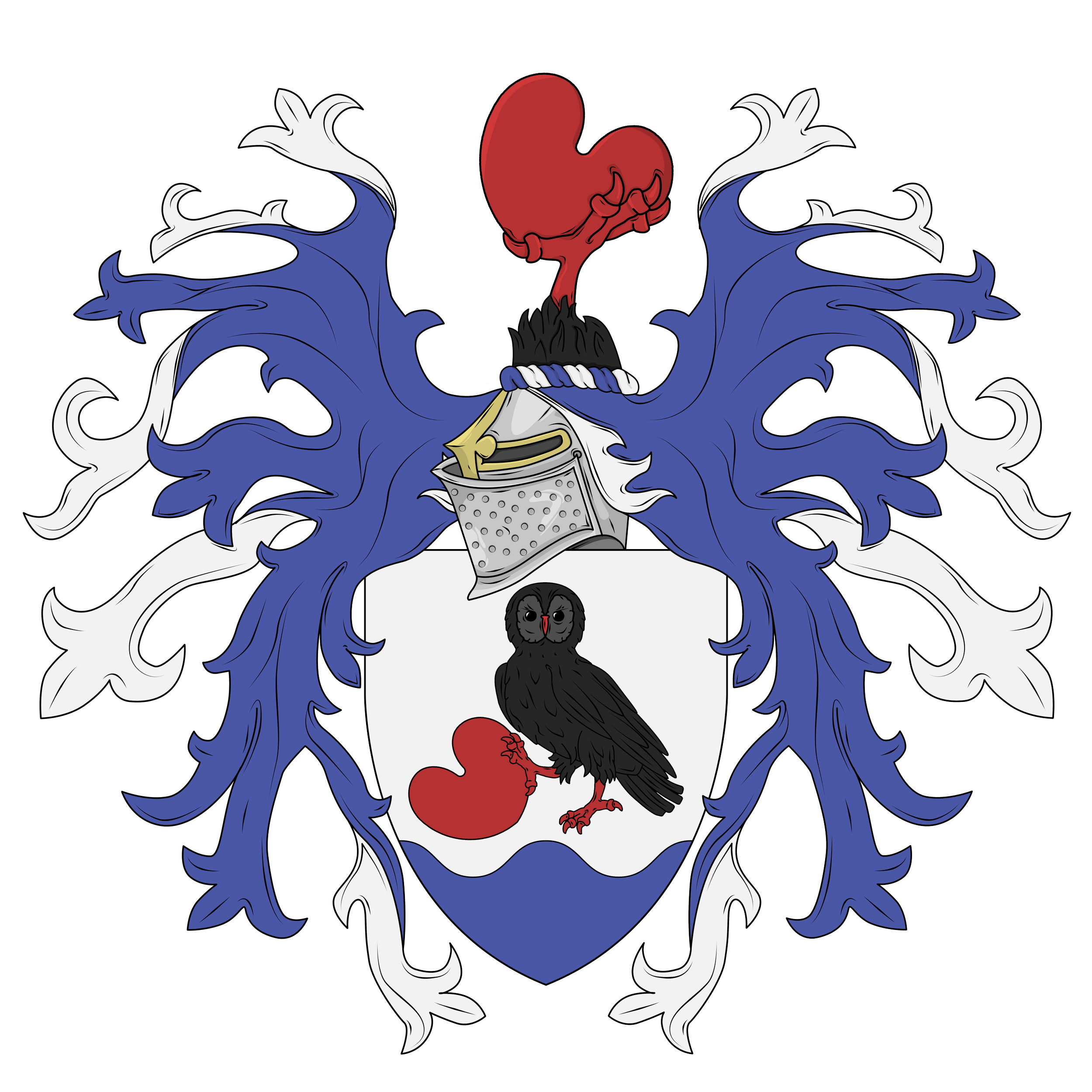
Personal Achievement of Arms
This design is that of my own achievement of arms, assumed and thereafter registered with the NEGHS Committee on Heraldry. Its design draws upon both my family history and my activities in the field of historical research. The element that features most prominently in the overall design is the pompeblêd, the heart-shaped water lily leaf. This symbol serves as one of the most recognizable emblems of Frisian identity, appearing prominently in the provincial coat of arms and flag of Friesland. In the design of the arms, the pompeblêd is carried by an owl, a traditional symbol of knowledge, signifying my continued stewardship of Frisian history. All of these elements are placed above a base of water, recalling the transmission of this knowledge across the sea from Friesland to America.
The blazon of the arms:
Arms: Silver an owl sable, beak and legs gules, holding in the dexter claw a water-lily leaf gules, a base wavy azure.
Crest: An owl’s leg issuant sable, the foot gules holding a water-lily leaf also gules.
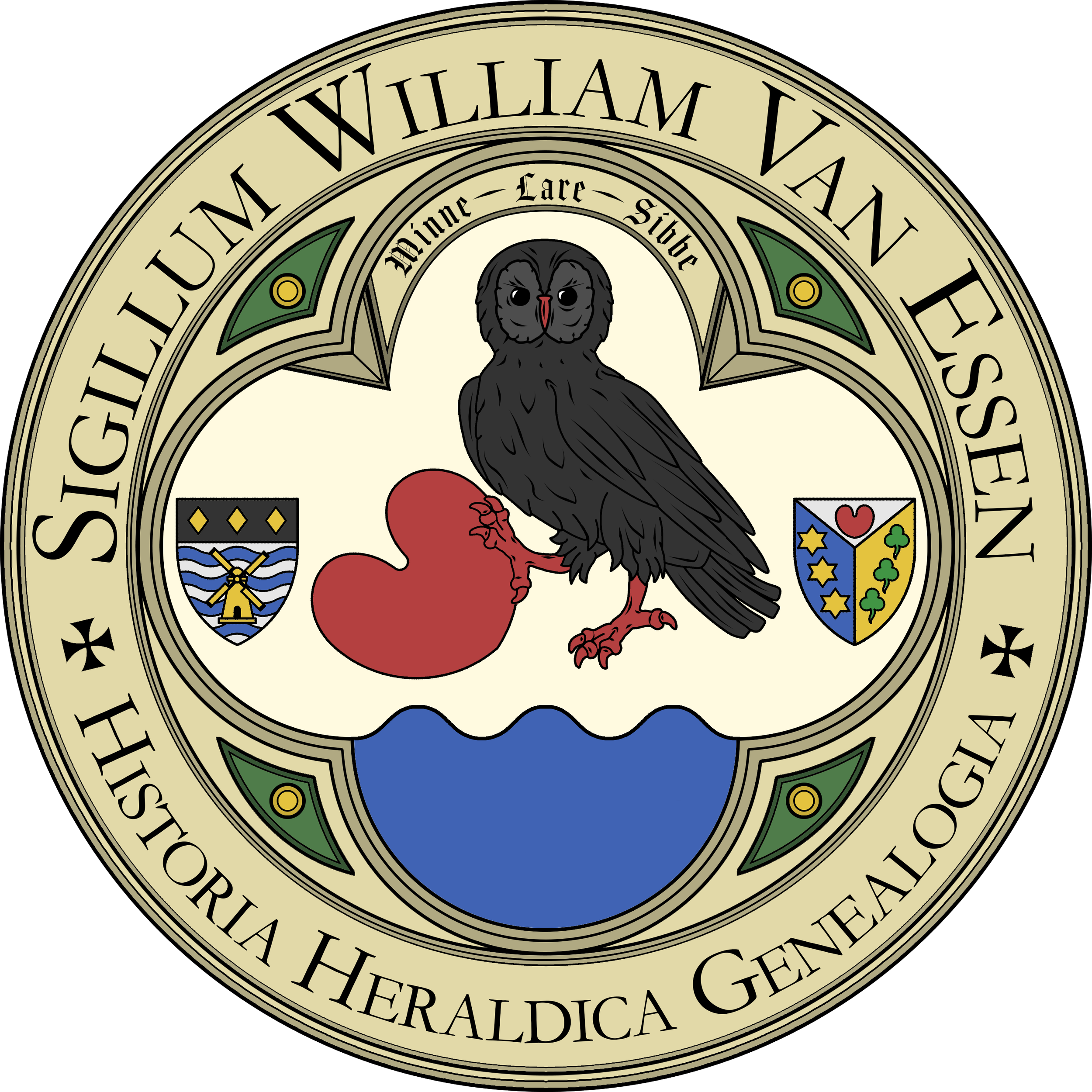
Personal seal incorporating elements of my own arms, flanked by the arms of my patrilineal lineage on the left and my matrilineal lineage on the right.