
Basics of Heraldry
Develop a foundational understanding of heraldic principles and their practical application.
Elements of the Design
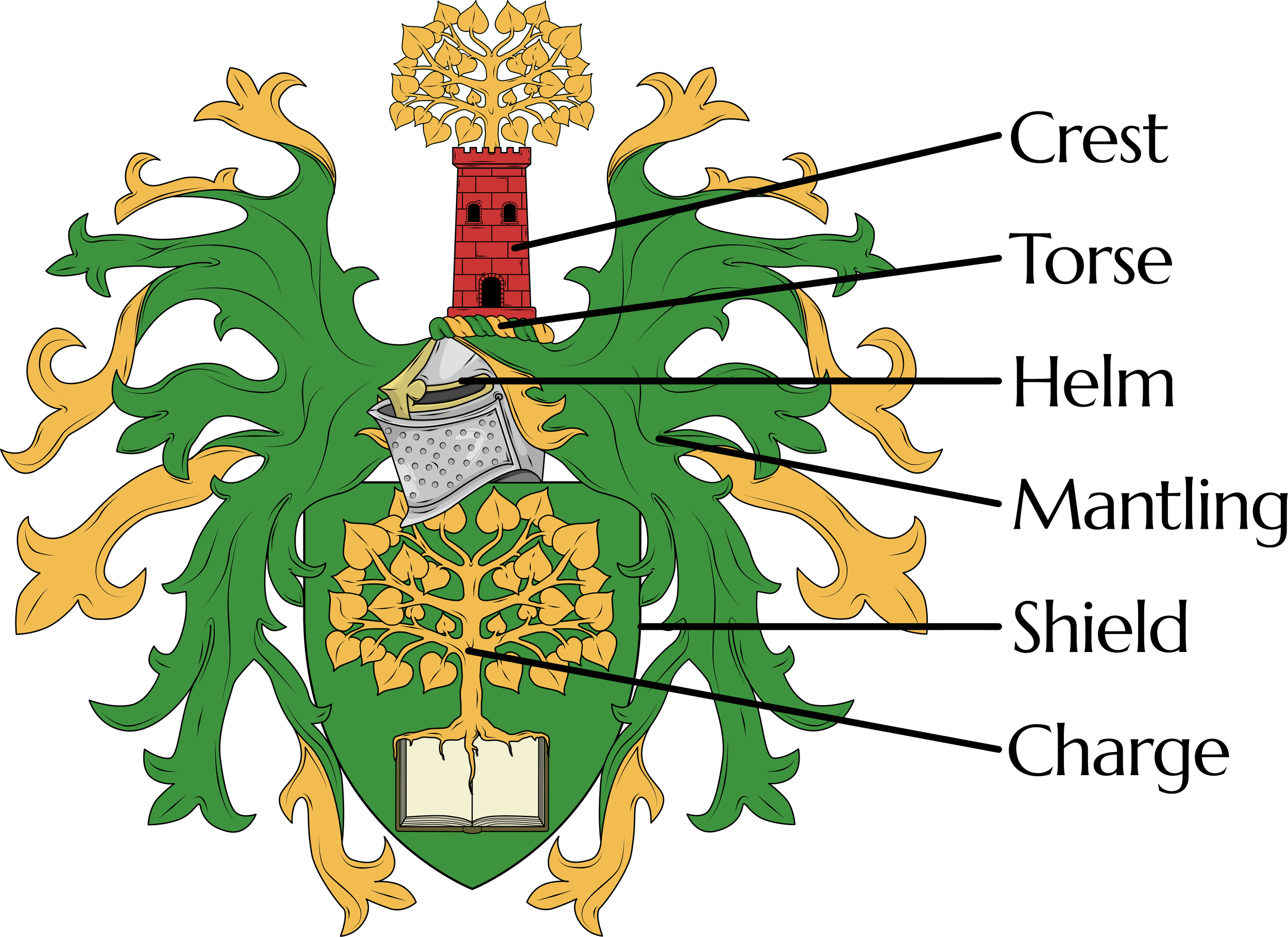
When people casually refer to a heraldic design associated with their family, they often call it a “family crest.” Although a crest is indeed an element of heraldic design, the term is frequently used incorrectly to describe the entire coat of arms. The complete arrangement of heraldic elements is known as an achievement of arms, which may incorporate several distinct components:
Crest: A heraldic figure or design traditionally placed above the helm. Crests originated as decorative elements worn on top of helmets and may feature animals, objects, or other symbolic figures.
Torse: A twisted band of fabric, traditionally depicted in alternating colors, that rests atop the helm and supports the crest. It is commonly shown in the principal colors of the arms.
Helm: The helmet positioned above the shield, which historically reflects the martial origins of heraldry. Its style and orientation may vary according to heraldic tradition, rank, and personal or institutional preference.
Mantling: A flowing, cloth-like decoration attached to the helm, traditionally representing fabric worn to protect the helmet and wearer from the elements. It is typically depicted in the principal colors of the arms.
Shield: The central element of the achievement, bearing the heraldic design that identifies its bearer. Its colors, divisions, and figures follow the principles and conventions of heraldry.
Charge: Any figure or symbol placed upon the shield. Charges may include animals, plants, objects, geometric figures, or other recognizable forms, each contributing to the design's distinctive character.